|

|

|

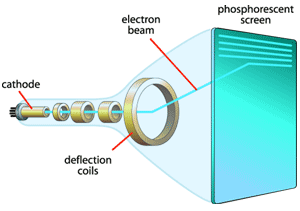
Beams of electrons shot from the back of the picture tube of your color television strike chemically coated dots on the inner surface of the screen to generate light. Each dot emits one of three colors of light—red, green, or blue—and the combination of dots glowing in these three colors creates a full-color picture. The electrons in your television can travel as fast as 30 percent of the speed of light, which means that, as they approach the screen, their mass in motion is 1.05 times their rest mass. TV engineers must take this increase in mass into account when they design the paths of the electron beams. If they didn’t, the electrons wouldn’t strike the dots correctly and the picture wouldn’t be the right color.
Home | Time | Length | Mass | Fuel | Spaceship | Thinking Like Einstein
© Exploratorium | Credits
|

|

|

|
|||